

A truck crash near an Aurora warehouse or distribution center is rarely a simple two-car story. The tractor may belong to one company. The trailer may belong to another. The load may have been packed by a shipper or a third-party warehouse crew. The driver may be an employee, a contractor, or someone whose status is disputed. Insurers still reach for Illinois shared-fault arguments. Sorting who may share liability starts with the relationships around the truck, not with a single phone call.
This overview explains common liability layers after a warehouse-corridor truck crash in Aurora. It is general information, not legal advice.
Why warehouse corridors create multi-party files
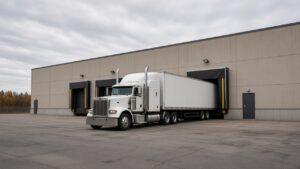
Aurora’s freight and warehouse patterns concentrate heavy vehicles on approaches to I-88, Route 59, Farnsworth, Eola, and similar industrial arterials. Trucks enter and leave docks, stage on shoulders, and mix with passenger traffic at shift changes. A crash at a driveway throat, a blind dock exit, or a turn from a private warehouse road onto a public street can involve private property facts and public roadway facts in the same file.
Get the responding agency name and report number. Photograph USDOT numbers, company names on the cab and trailer, trailer numbers, and the dock or gate location when you can do so safely. Those identifiers are how later coverage searches begin.
Who may share liability besides the driver
Several actors can appear in a warehouse truck file, depending on the facts:
- The driver, for negligent operation
- The motor carrier that employed or dispatched the driver, when agency or other responsibility theories fit the facts
- A shipper or loader, when negligent loading, securement, or overweight conditions contributed
- A warehouse or property actor, when premises conditions on a private drive or dock approach contributed
- Another motorist, when comparative fault is genuinely shared
A list like this does not mean every party is liable in your case. Liability still depends on duty, breach, causation, and damages under Illinois negligence principles. The point is to investigate beyond the first insurance card handed over at the scene.
Click to contact our personal injury lawyers today
Illinois modified comparative fault still applies
Commercial vehicle claims still use Illinois modified comparative fault. Under 735 ILCS 5/2-1116, contributory fault above 50 percent of the proximate cause of the injury or damage bars recovery. At 50 percent or less, damages are reduced by your share rather than wiped out.
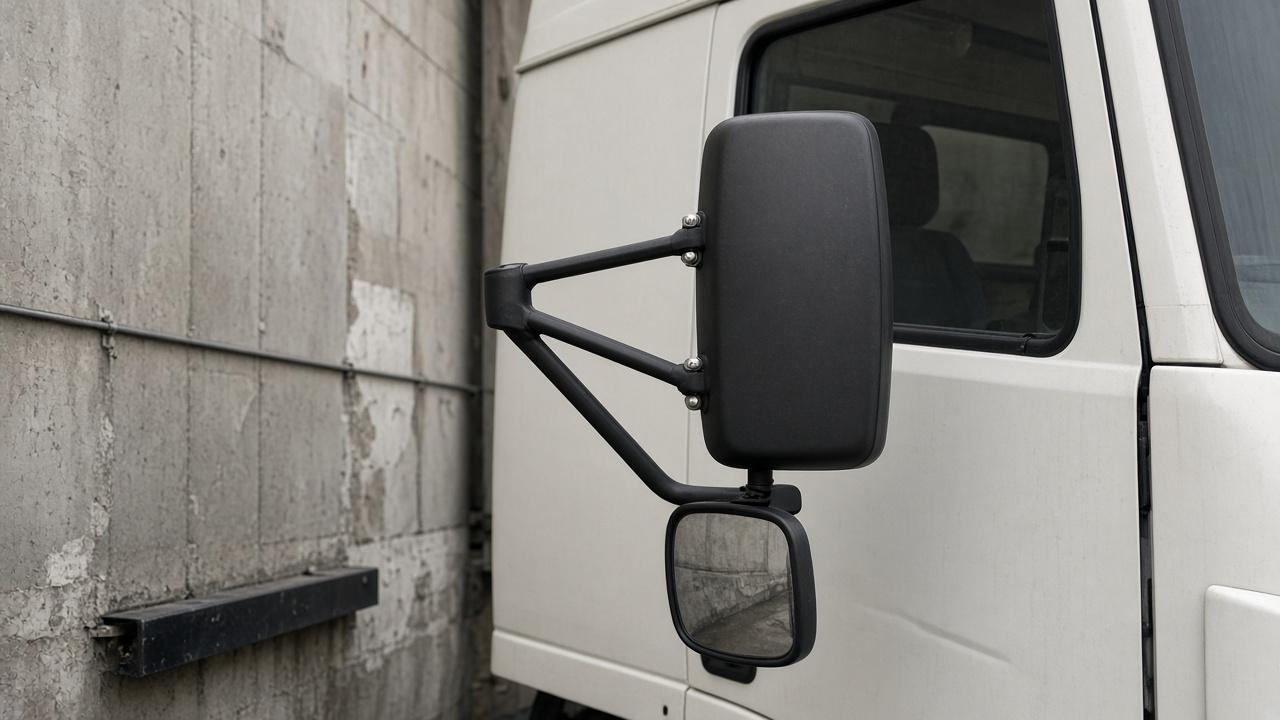
Warehouse truck insurers often argue that a passenger car “cut off” a turning tractor, misjudged trailer off-tracking, or stopped short in a dock queue. Photos of mirror positions, turn radius, skid marks, and dock sight lines matter more than later descriptions. Do not give a recorded statement that debates blind-spot theory before you have the report and scene photos.
Illinois also limits how much one defendant can be made to pay for another’s share. Under 735 ILCS 5/2-1117, a defendant found less than 25 percent at fault is generally liable only for its own share of non-medical damages, while defendants remain jointly liable for medical expenses.
For a Free Legal Consultation

Deadlines and public defendants
Many personal injury actions must be commenced within two years under 735 ILCS 5/13-202. Claims against a local public entity or its employees often must be commenced within one year under 745 ILCS 10/8-101(a). A crash that begins on a private warehouse drive and ends on a city street can still raise public-entity questions if a municipal vehicle or another local public defendant is involved. Confirm the defendant set early.
Evidence that disappears fast in truck files
Commercial files generate records that ordinary car crashes do not. Electronic logging data, dispatch notes, bills of lading, gate logs, and warehouse camera systems can be overwritten on short cycles. Ask counsel about preservation letters quickly. Keep your own photos of the cab doors, trailer sides, placards, and any spilled or shifted cargo visible from a safe distance.
Medical documentation still anchors the injury side. See a doctor promptly. Tell providers a commercial truck was involved and describe the impact as accurately as you can. Save work-restriction notes.
Coverage layers without guessing policy limits
Warehouse truck files often involve more than one liability policy: a primary commercial auto policy, possible excess coverage, and sometimes separate coverage tied to a trailer owner or a logistics contractor. Do not invent limit numbers. Identify every company named on the cab, trailer, bill of lading, and gate log, then let coverage counsel or the firm map the policies. Your own uninsured or underinsured motorist coverage can also matter when a responsible policy is missing or too thin, subject to your policy language and Illinois law.
Related Aurora injury pages
Warehouse truck crashes often overlap with other injury claims the firm handles in the Fox Valley. See the firm’s Aurora truck accident page and Aurora car accident page for more.
Private drive versus public road
Some warehouse crashes begin on a private driveway or yard and end on a public Aurora street. Premises theories, roadway theories, or both may apply depending on where each negligent act occurred. Photograph the gate, the driveway throat, warning signs, and the first public curb or lane marking. County lines still matter for venue once the case is in suit. Do not assume a private drive means there is no claim, and do not assume a public street means only one defendant.
What not to assume after a dock-area crash
Do not assume the logo on the trailer identifies every responsible company. Do not assume a “contractor” label ends the carrier’s exposure without reviewing the relationships. Do not assume Illinois will apply another state’s truck rules. Stick to the identifiable companies, the load paperwork you can lawfully obtain, and the scene evidence.
What to tell medical providers
Tell every provider a commercial truck was involved, roughly how the impact occurred, and which body parts took the force. Mention trailer swing, underride, or a dock-height bumper if that is what happened. Consistency across records helps later when an insurer argues that warehouse work or a prior condition explains the injury. Bring a simple medication list so charts stay accurate.
Frequently asked questions
Can more than one company be responsible for an Aurora warehouse truck crash?
Yes, depending on the facts. Driver negligence, carrier responsibility, and negligent loading or premises conditions can overlap. Each theory still has to be proven.
What if the insurer says I was more than half at fault?
Under 735 ILCS 5/2-1116, more than 50 percent contributory fault bars recovery in the actions the statute covers. Keeping your percentage at or under 50 percent is why early scene and medical evidence matter.
How long do I have to file?
Many injury actions run two years under 735 ILCS 5/13-202. Local public-entity claims often run one year under 745 ILCS 10/8-101(a). Confirm which clock fits your defendants.
For a case-specific evaluation, contact Shammas Law Office at 312-909-2129 (Aurora office, 411 W Galena Blvd Ste 102) or 312-971-5959 (Chicago office). There is no attorney fee unless the firm recovers compensation for you. This article is general information, not legal advice.
Sources
- 735 ILCS 5/2-1116, Limitation on recovery in tort actions: https://www.ilga.gov/Documents/legislation/ilcs/documents/073500050k2-1116.htm
- 735 ILCS 5/13-202, Personal injury limitations: https://www.ilga.gov/documents/legislation/ilcs/documents/073500050k13-202.htm
- 745 ILCS 10/8-101, Tort Immunity Act limitation: https://www.ilga.gov/Documents/legislation/ilcs/documents/074500100K8-101.htm
- 735 ILCS 5/2-1117, Joint liability: https://www.ilga.gov/Documents/legislation/ilcs/documents/073500050k2-1117.htm
Call 312-971-5959 or Complete a Free Case Evaluation Form