

Illinois law requires drivers to stop after a crash, exchange information, help anyone who is hurt, and notify police when the crash causes injury, death, or property damage above a set amount. The core rules sit in the Illinois Vehicle Code at 625 ILCS 5/11-401 through 11-407. For an Aurora driver standing on the shoulder of Route 59 or Indian Trail, the short answer is simple: if anyone is hurt, call police.
This post explains each duty in plain terms and why the report matters later. It is general information, not legal advice.
What Illinois requires at the scene of every crash
Two sections set the duty to stop. Under 625 ILCS 5/11-401, a driver in a crash that injures or kills anyone must stop immediately at the scene, or as close as possible, and remain there until the information and aid duties are met. Under 625 ILCS 5/11-402, the same stop and remain duty applies to crashes that damage only a vehicle that is driven or attended by a person.
The law allows one practical exception for damage only crashes. Section 11-402 lets a driver move the vehicle as soon as possible off the highway to the nearest safe location, such as an exit ramp shoulder, a frontage road, or the nearest suitable cross street, and wait there. If a damaged vehicle blocks traffic lanes, the driver must make every reasonable effort to move it.
What information must drivers exchange?
Under 625 ILCS 5/11-403, a driver in a crash involving injury, death, or damage to an attended vehicle must give the other people involved:
- The driver’s name and address
- The vehicle’s registration number
- The name of the vehicle’s owner
- The driver’s license, shown on request if available
The same section requires the driver to give reasonable assistance to anyone injured, including arranging transport for medical treatment when it is apparent that treatment is needed or the injured person asks for it. Failing to meet these duties is a Class A misdemeanor under the statute.
Click to contact our personal injury lawyers today
When must you call police after a crash?
Section 11-407 sets the notice rule. When no officer is already at the scene, the driver must notify police by the fastest available means if the crash:
- Injures or kills any person
- Causes property damage over $1,500 to any person’s property, including the driver’s own, or over $500 if any vehicle involved lacks the liability insurance Illinois requires
- Involves a school bus and results in any property damage, injury, or death
- Occurs within 50 feet of a school bus and injures or kills a person waiting for, boarding, or leaving the bus
For a crash inside Aurora city limits, that call goes to the local police department. Outside a municipality, the statute points to the county sheriff or the Illinois State Police. If the driver cannot make the call, another capable occupant must do it.
Damage estimates are hard to make at the roadside. Modern bumpers and sensors can cost more than they look. When in doubt, calling police is the safer choice. Drivers no longer have to file a separate written crash report with the Illinois Department of Transportation. That requirement ended under Public Act 102-560. Police send their own report to the state. An officer’s report also records the scene while the vehicles are still in place.
For a Free Legal Consultation

What if the other driver leaves?
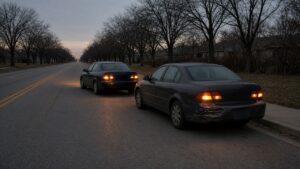
Leaving the scene of an injury crash carries serious penalties. Under 625 ILCS 5/11-401, a driver who fails to stop and remain at an injury or death crash commits a Class 4 felony. If the other driver flees, write down every detail you can: partial plate characters, color, make, and direction of travel. The firm’s post on hit and run claims in Illinois explains how your own coverage may apply.
Why the police report helps an injury claim
A police report is not the final word on fault, but it gives you a neutral starting record. It usually lists the drivers, vehicles, insurance details, witnesses, and the officer’s observations. That record helps when memories fade or a driver changes the story weeks later.
Aurora covers parts of Kane, DuPage, Will, and Kendall counties, and the crash location can affect which agency responds. Write down the agency name, the officer’s name, and the report number before you leave.
Steps to take before you leave the scene
- Check for injuries and call 911 if anyone is hurt.
- Move to safety if your vehicle can be driven and the crash damaged only vehicles.
- Exchange the required information with every driver involved.
- Photograph the vehicles, the road, signals, and any visible injuries.
- Collect witness names and phone numbers.
- Get the report number or ask how to obtain the report later.
- See a doctor promptly, even if you feel fine at first.
Keep statements to insurers factual. Avoid guessing about speed or fault before you have the report and photos in hand.
Talking to insurers after the report
Most auto policies ask you to report a crash to your own insurer promptly, even when you believe the other driver caused it. Read your policy for its notice terms. Your coverage may include medical payments or uninsured motorist benefits that matter while fault is in dispute.
The other driver’s insurer may call within days and ask for a recorded statement. You can share basic facts, such as the date, place, and vehicles involved. You do not have to guess about speed, distances, or your injuries before you have seen a doctor and reviewed the police report. Keep claim numbers, adjuster names, and every letter in one place.
Deadlines that follow a crash
Reporting duties run in minutes. Lawsuit deadlines run longer, but they still matter. Personal injury suits in Illinois generally must be commenced within two years under 735 ILCS 5/13-202. Claims involving a local public entity often must be commenced within one year under 745 ILCS 10/8-101.
You can find more on the firm’s Aurora car accident page.
Frequently asked questions
Do I have to call police after a minor accident in Illinois?
You must notify police when the crash injures anyone or causes property damage over $1,500, or over $500 if a vehicle involved is uninsured. For smaller damage only crashes, you still must stop and exchange information.
Can I move my car after an accident in Illinois?
Yes, for crashes that damage only vehicles. Section 11-402 lets you move to a safe nearby location off the highway and wait there to exchange information.
What information do I have to give the other driver?
Under 625 ILCS 5/11-403, you must give your name, address, registration number, and the vehicle owner’s name, and show your license on request if available.
If you have questions after a crash in the Aurora area, you can contact Shammas Law Office at 312-909-2129 (Aurora office, 411 W Galena Blvd Ste 102) or 312-971-5959 (Chicago office). You pay nothing up front, and you owe no fee unless the firm recovers money for you. This article is general information, not legal advice.
Sources
- 625 ILCS 5/11-401, Crashes involving death or personal injuries: https://www.ilga.gov/legislation/ilcs/documents/062500050K11-401.htm
- 625 ILCS 5/11-402, Crash involving damage to vehicle: https://www.ilga.gov/legislation/ilcs/documents/062500050K11-402.htm
- 625 ILCS 5/11-403, Duty to give information and render aid: https://www.ilga.gov/legislation/ilcs/documents/062500050K11-403.htm
- 625 ILCS 5/11-407, Immediate notice of crash: https://www.ilga.gov/legislation/ilcs/documents/062500050K11-407.htm
- 735 ILCS 5/13-202, Personal injury limitations: https://www.ilga.gov/legislation/ilcs/documents/073500050k13-202.htm
- 745 ILCS 10/8-101, Tort Immunity Act limitation: https://www.ilga.gov/legislation/ilcs/documents/074500100K8-101.htm
- IDOT, Crash Reports (P.A. 102-560, SR1B Motorist Report no longer required): https://idot.illinois.gov/form-and-reports/crash-reports.html
Call 312-971-5959 or Complete a Free Case Evaluation Form