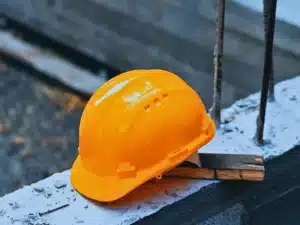



A construction injury third party claim is the part of the case most injured workers never hear about. The foreman files a workers’ compensation report. A carrier starts sending checks. Everyone treats that as the whole case. On a job site with one employer, it usually is. Construction sites rarely have one employer. They have an owner, a general contractor, a dozen trades, and equipment that somebody else built and delivered. Any of those companies can owe a worker far more than comp ever pays.
What follows covers what comp leaves unpaid, who else can owe you, what you have to prove, and what happens to the money when both claims succeed.
What Comp Pays and What It Leaves Out
Workers’ compensation in Illinois pays without regard to fault. It covers medical care and part of the lost wages. Wage checks during recovery run at two thirds of the worker’s average weekly pay.
The trade is steep. Comp pays nothing for pain and suffering. It never makes up the missing third of a paycheck. A union ironworker with a crushed foot may never return to the trade, and the comp system prices that loss on a schedule.
Comp does move fast, which helps. Benefits can start within weeks, long before any lawsuit resolves.
Under 820 ILCS 305/5, a covered worker also cannot sue the employer for the injury. Lawyers call that the exclusive remedy rule. The same section opens a second door. When someone other than the employer bears legal responsibility, the worker may sue that party while still collecting comp.
Who Counts as a Third Party
The list on a typical project runs long. A general contractor who controls site safety can qualify. So can another subcontractor whose crew left a floor opening uncovered. A property owner who directs the work sits on the list too.
Companies off the site matter as well. Think of a scaffold manufacturer, a crane rental outfit, or the driver of a delivery truck that backs into a worker. Each one stands outside the employment relationship, so the exclusive remedy rule does not protect them.
Sorting out who is who takes work. Subcontract agreements, insurance certificates, and the project safety manual show which company took on which duties. Workers often do not know the legal name of the general contractor, let alone the firm that erected the scaffold.
Click to contact our personal injury lawyers today
You Have to Prove Fault
This is where the two claims split. Comp asks only whether the injury arose from the job. A third party case asks who was careless.
Illinois once made that easier. The Structural Work Act gave injured construction workers a direct claim against those in charge of the work. Lawmakers repealed it in 1995. Since then, ordinary negligence law governs these cases.
For a Free Legal Consultation

The Question of Control
Most disputes with a general contractor or owner turn on one word. A company that hires an independent contractor usually does not answer for that contractor’s mistakes. The exception applies when the hiring company kept control over how the work got done.
The Illinois Supreme Court drew the line in Carney v. Union Pacific Railroad Co. in 2016. A worker lost both legs during a bridge removal. He sued the railroad that had hired the demolition contractor. The court ruled for the railroad. A general right to stop the work, inspect it, or order changes did not amount to control over the methods and details.
That ruling shapes how these cases get built. The contract matters, and so does daily practice. Who ran the safety meetings? Did anyone have authority to halt unsafe work, and did they use it? Whose superintendent told the trades where to set up? Site safety plans, daily logs, and meeting minutes answer those questions better than any witness. OSHA inspection files can also help show who controlled the hazard.
Your Employer Gets Paid Back
A third party recovery does not sit on top of comp untouched. Section 5(b) gives the employer a lien. The employer, or its carrier, recovers the benefits it paid out of the judgment or settlement.
Two provisions soften that. The employer has to bear its share of the costs of the case. It also pays 25 percent of its reimbursement toward the worker’s attorney fees, unless the parties agree otherwise.
The employer holds real leverage too. A worker cannot settle the third party case without the employer’s written consent, unless a court order protects the lien. Negotiating that lien often decides how much the worker actually keeps.
Two Claims on Two Calendars
The comp claim and the lawsuit run on separate deadlines. Most negligence claims in Illinois expire two years after the injury. The comp claim follows its own filing period before the Workers’ Compensation Commission.
Section 5(b) adds a twist. If the worker has not filed suit three months before the deadline, the employer may sue the third party itself. A worker who waits that long hands control of the case to the comp carrier.
Evidence does not wait either. Crews strike scaffolds, fill trenches, and move equipment to the next job within days. Photos and a preservation letter sent in the first week protect proof that no one can recreate later.
Were you hurt on a job with more than one company on site? Our construction accident team identifies every contractor and supplier with a hand in the work, and we deal with the comp lien before it eats the recovery. We represent the trades across Chicago, and our Aurora construction accident lawyer page covers projects in the Fox Valley. Injuries in warehouses and plants raise the same questions, which our workplace accident practice handles.
Call 312-971-5959 or Complete a Free Case Evaluation Form